Welcome, I'm Jack Krolik
Building tools at the intersection of data science and brain health.
Get in Touch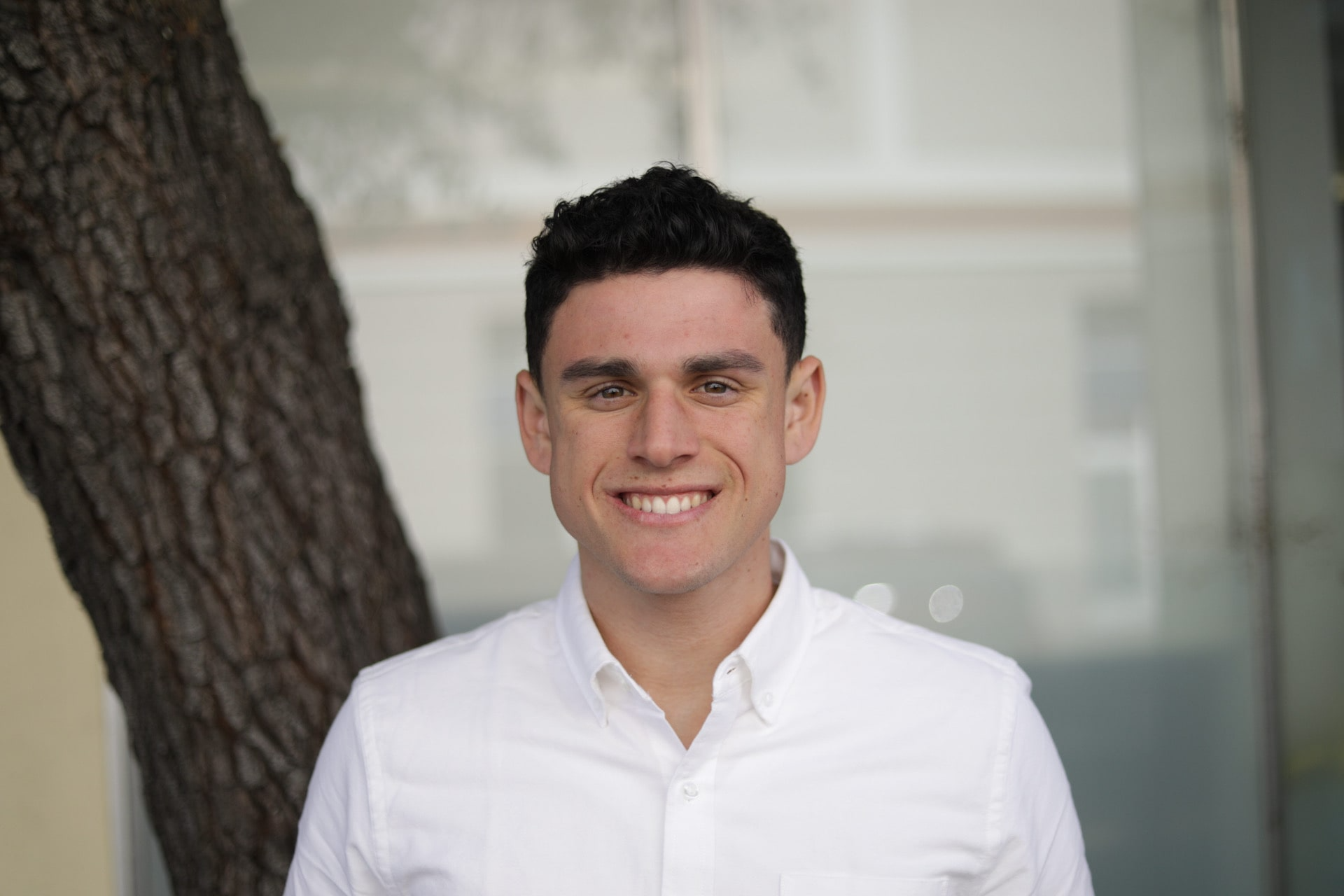
Building tools at the intersection of data science and brain health.
Get in Touch
I’m Jack Krolik, a Neuroscience and Data Science graduate from Northeastern University, Class of May 2025. I’m currently working at UCSF in Dr. Joline Fan’s lab, where I focus on computational neuroscience and clinical EEG research. I’ve always been drawn to using technology to improve people’s lives, especially in brain health and medicine. Over time, that interest has turned into a clear mission: build tools that move research out of theory and into real clinical impact.
My fascination with the brain started back in high school. I joined a mental health club and found myself reading books like Grit by Angela Duckworth, which sparked something in me. Then, during my freshman year of college, I got a concussion. To recover, I started using exercise to increase blood flow and support my recovery, and it worked better than I expected. That experience made the science personal. It pushed me to understand how tightly the brain and body are connected, and how much room there is to design better interventions.
Around the same time, I became obsessed with data through fitness tracking. I loved quantifying performance, testing hypotheses on myself, and watching trends shift over weeks and months. That mindset naturally expanded into data science. I realized that if you combine rigorous analytics with neuroscience, you are not just describing the brain, you are building systems that can decode and eventually interface with it.
At UCSF, I work with large-scale intracranial EEG datasets from epilepsy patients, including over 1,000 hours of recordings. I’ve built deep learning pipelines, including CNN-LSTM architectures with multi-head attention, to classify sleep stages and identify pathological neural activity. The models significantly improved performance over baseline approaches, and we are preparing the work for publication while making the code reproducible and extensible for other researchers. Much of my focus now is on robustness, generalization across datasets, and translating models into clinically meaningful tools.
Before UCSF, I worked at Northeastern’s Brain ImPACT Lab, helping lead exercise interventions for individuals recovering from traumatic brain injuries. I assisted with EEG and MRI sessions and analyzed how structured physical activity influences recovery trajectories. Working directly with participants grounded the research in something real. It reminded me that behind every dataset is a person trying to get their life back.
I’ve also spent time in industry. At Suki AI, I led the launch of a web-based medical calculator for clinicians and built an LLM-powered evaluation system that reduced medical review time by 96%. At MasterControl, I developed a regulatory compliance chatbot using Neo4j, Mistral-7B, and retrieval-augmented generation, cutting response time by 75% and presenting the work at a major industry summit. Those experiences taught me how to ship, iterate fast, and think in terms of user impact, not just model performance.
Looking ahead, I’m excited by opportunities that sit at the intersection of neuroscience, machine learning, and real-world deployment. That could mean continuing in industry, stepping into product-driven technical leadership, or eventually pursuing a PhD if it enables me to push the frontier of brain-computer interfaces and neuroengineering. Wherever I go, I want to work on problems that matter and build systems that genuinely expand what is possible in brain health and human performance.
May 2024 – Present
UCSF, Neuropsychiatry Lab
Aug 2024 – Dec 2024
MasterControl, Salt Lake City, UT
May 2024 – Aug 2024
Suki.AI, Redwood City, CA
Undergraduate Research Assistant at Northeastern University (Sept 2024 – Present).
Krolik, J., Mahal, H., Ahmad, F., Trivedi, G., & Saket, B. (2024). "Towards Leveraging Large Language Models for Automated Medical Q&A Evaluation." arXiv:2409.01941 [cs.CL].
Successfully completed the Half Ironman triathlon, a 70.3-mile endurance event combining swimming, cycling, and running. This experience strengthened my mindset, goal-setting discipline, and understanding of human performance optimization.
Worked as a certified personal trainer at the YMCA, where I guided clients in strength training, cardiovascular health, and performance tracking. This role deepened my interest in the brain-body connection and gave me insight into motivating behavior change at an individual level.